
Chimney Sweeping & Gas Appliance Installations
Before any gas fire or gas appliance can be installed, it is a legal requirement that the chimney or flue is inspected and swept.
Under Gas Safe Regulations and Building Regulations Part J (Combustion Appliances and Fuel Storage Systems), the flue must be checked to ensure it is safe, suitable, and fit for use prior to installation.
Why chimney sweeping is required
A chimney sweep must be carried out to confirm that:
- The flue is clear of soot, debris, or blockages that could restrict airflow or allow dangerous gases, such as carbon monoxide, to enter the property.
- The chimney or flue is in a safe and suitable condition to correctly remove combustion gases produced by the appliance.
- The installation complies with the Gas Safety (Installation and Use) Regulations 1998, allowing the appliance to operate safely and efficiently.
For these reasons, we cannot proceed with any gas appliance installation unless the chimney has been swept and confirmed clear.
Certification and approved chimney sweeps
The chimney sweep must provide a certificate of flue worthiness that is acceptable to the Gas Safe Engineer carrying out the installation. The sweep should also be registered with a recognised professional body, such as the National Association of Chimney Sweeps (NACS).
Our recommended chimney sweep
We have worked with Ian Gay Chimney Sweeps for many years and are confident in the high standard of service and workmanship they provide, which is why we are happy to recommend them.
You are, of course, free to use an alternative chimney sweep of your choosing, provided they are suitably registered and able to supply the required certification.
If you have any questions about chimney sweeping requirements or would like us to recommend a trusted local sweep, please don’t hesitate to get in touch.
Chimney Sweeping FAQs
How often does a chimney need to be swept?
Sweeping frequency depends on the type of appliance and fuel used. As general guidance from the National Association of Chimney Sweeps (NACS):
- Gas appliances: At least once a year
- Oil appliances: Once a year
- Smokeless fuel: At least once a year
- Wood-burning appliances: Quarterly when in use
- Bituminous coal: Quarterly when in use
Your chimney sweep will be able to advise the most appropriate frequency for your specific appliance and usage.
Why is chimney sweeping important?
Chimneys must allow the safe and free passage of combustion gases. Sweeping removes soot, debris, bird nests and other blockages, helping to reduce the risk of carbon monoxide entering the property and preventing chimney fires. Regular sweeping can also improve appliance efficiency.
Do gas flues still need to be swept?
Yes. Although gas appliances typically produce less soot, sweeping is still essential to identify and resolve issues such as blockages, structural defects, or restricted airflow. Annual sweeping also helps reduce the risk of carbon monoxide poisoning.
Will chimney sweeping make a mess?
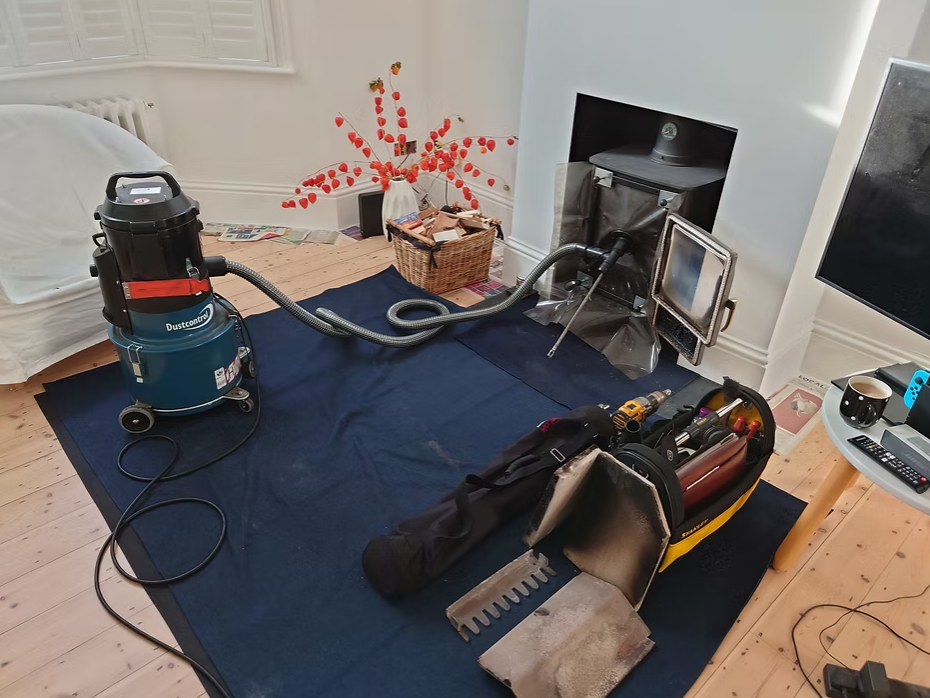
Professional chimney sweeps are trained to minimise dust and disruption and will use protective sheets to protect surrounding areas. In rare cases, such as heavily blocked chimneys or bird nests, some mess may be unavoidable.
How should I prepare for a chimney sweep visit?
You may be asked to:
- Ensure clear access to the fireplace or appliance
- Remove ornaments from the hearth or mantelpiece
- Clear any ash or unused fuel where possible
Your sweep will bring appropriate dust protection for floors and furniture.
Will I receive a certificate after the chimney is swept?
Yes. A registered chimney sweep should provide a certificate of sweeping or flue worthiness, which is required before a Gas Safe Engineer can proceed with a gas appliance installation.
Why should I use a NACS-registered chimney sweep?
NACS members undergo formal training, assessment, and must hold appropriate insurance. Using a registered sweep helps ensure work is carried out safely, professionally, and in line with industry standards.